Most Google Ads accounts we audit are not failing because of bidding. They are failing because they buy attention from people who were never going to buy, then judge the campaign on cost per click instead of cost per qualified enquiry. Four levers decide the difference.
Lever one: separate the three kinds of intent
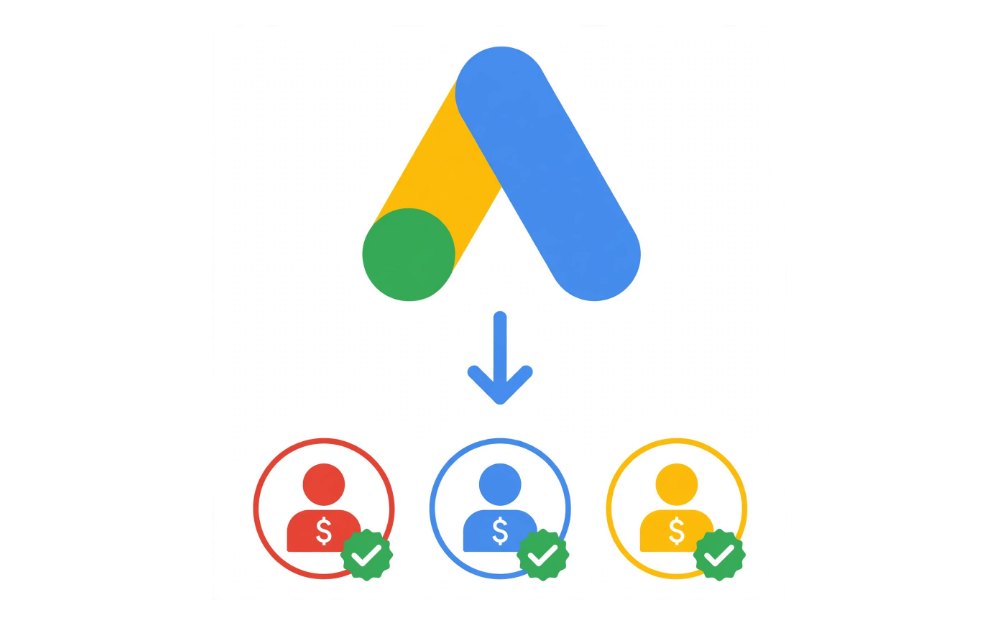
Every keyword sits somewhere on a spectrum. Research intent ("how much does interior design cost") produces volume and almost no enquiries. Comparison intent ("best interior designer in Lucknow") produces enquiries that need nurturing. Transactional intent ("interior designer near me contact") produces the calls your sales team wants. These three should never share a campaign, because they need different budgets, different bids and different landing pages.
When they are mixed, the research keywords eat the budget first — they always have the highest volume — and the transactional keywords get throttled before lunch. Splitting them is often the single change that doubles enquiry volume on the same spend.
Lever two: use match types deliberately
Broad match tells Google to interpret your intent. On a small budget that interpretation is expensive. Start with phrase and exact match on the terms you know convert, prove the cost per enquiry, and only then open a small, separately budgeted broad-match campaign as a discovery channel. Review its search terms weekly and promote the winners into your exact-match campaign.
Lever three: negative keywords are the campaign
A negative keyword list is not housekeeping — it is the main ongoing job. Without one you pay for "free", "cheap", "jobs", "salary", "course", "internship", "DIY" and the names of competitors you do not want to be compared against. We build a starting list before launch from three sources: obvious modifiers, the client's own experience of time-wasting enquiries, and the first two weeks of real search-term data.
A campaign with no negative list is not a lead generation campaign. It is a donation to Google with a small side benefit.
Lever four: one landing page per promise
If your ad says "modular kitchens in Lucknow" and the click lands on a homepage listing eight services, you have broken the promise and you will pay for it twice — in a lower Quality Score and in a lower conversion rate. Each ad group needs a page that repeats its exact promise in the headline, shows proof relevant to that service, and asks for one action.
- Headline that matches the ad copy word for word where possible.
- Proof close to the fold — real project photos, a named client, a specific number.
- One form, four fields maximum, above the fold on mobile.
- A phone number that is tappable, plus WhatsApp if your buyers use it.
- No navigation menu competing with the form.
What to measure instead of clicks
Cost per qualified enquiry
Not cost per click, and not cost per form fill. Qualified means your sales team would call them back.
Enquiry-to-meeting rate
Tells you whether the traffic is the right kind, separate from whether the volume is enough.
Search term relevance
The percentage of spend going to terms you would have chosen yourself. Below 70% means your negatives need work.
Landing page conversion rate
Compare per ad group. A single weak page usually explains a whole campaign's poor numbers.
A realistic first 30 days
Week one: launch exact and phrase match on transactional terms only, with a pre-built negative list. Week two: read search terms daily, add negatives, kill any keyword with spend and no conversion path. Week three: split the best-performing ad group onto its own landing page and test a second headline. Week four: report on cost per qualified enquiry, and only then decide whether to increase budget.
Frequently asked questions
What budget do I need to start?
Enough to collect meaningful data in a month, which in most Lucknow service categories means a daily budget that buys at least 15–20 clicks a day on your transactional terms. Below that, you are optimising on noise.
Should I run Performance Max?
Not as your first campaign. It gives you the least control precisely when you most need control. Establish what converts with search campaigns first, then let Performance Max scale it.
How long before leads improve?
Structural fixes — intent splits, negatives, a dedicated landing page — usually show up within two to three weeks. Bid and creative optimisation compounds over months.